
These Surprising Foods Are the Most Likely to Contain Pesticides, Which foods have the most pesticide residue? Pesticide exposure has been linked to a slew of serious health complications. Experts urge that this doesn’t mean you need to cut out the foods altogether. Here’s what to do to stay safe. A growing body of research has detected pesticides in a range of foods. Now, the non-profit research organization the Environmental Working Group (EWG) has released its annual “dirty dozen” list of foods with the most pesticides, with some surprising additions. In case you’re not familiar, the “dirty dozen” list is the result of a scientific analysis of fruits and vegetables that looks for the presence of pesticides based on the latest government testing data on nonorganic produce. Produce that makes the “dirty dozen” are the 12 fruits and vegetables that are the most likely to be pesticide-laden..
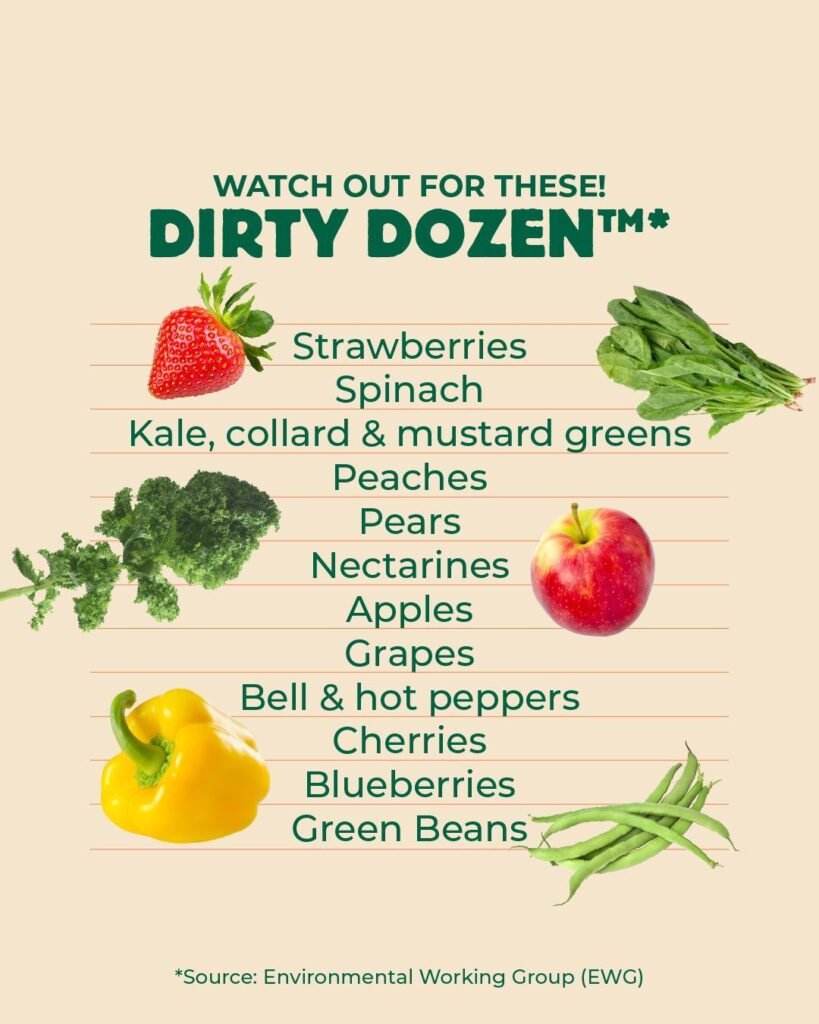
These foods are on the “dirty dozen” list based on pesticide residue by weight:
Spinach
Strawberries
Kale (along with mustard greens and collards)
Grapes
Peaches
Cherries
Nectarines
Pears
Apples
Blackberries
Blueberries
Potatoes
It depends on the type of pesticide, along with the amount you’re exposed to and over what period of time. However, research has linked pesticides to a range of potential health complications.
Pesticides have been linked to:
Premature births
Neural tube defects
Miscarriage and a higher risk of genetic damage
Lower sperm concentrations
May increase the risk of heart disease and CANCER
Possibly. “Organic options typically have lower pesticide residues,” Detwiler says, noting that organic farming prohibits most synthetic pesticides. Research shows that people who eat mostly organic foods tend to have lower levels of pesticide residues in their bodies.However, ‘organic’ does not mean ‘pesticide-free.’ It only really means that different, often less toxic, substances are used.The United States Department of Agriculture (USDA) makes clear that being labeled ‘organic’ does not imply that a food item is more nutritious or safer than conventional food, Still, choosing organic options for produce that landed on the “dirty dozen” list may be a good choice if you’re trying to reduce your pesticide exposure.
You shouldn’t stop eating non-organic produce based on these findings. “Nobody should feel [guilty] for eating conventional produce.It’s still far better than skipping fruits and veggies altogether. However, if you’d rather lower your exposure to pesticides, there are a few things you can do to remove any type of residue from your produce, according to the U.S. Food and Drug Administration (FDA)
1. Wash your produce well (even before peeling) so you don’t transfer residue on the outside of the fruits and vegetables to the inside. (No need to use soap!)
2.Remove outer leaves and layers, like the outer leaves of lettuce and carrot skin.
3. Scrub firm produce like melons or cucumbers with a vegetable brush under running water.
Washing helps, but it doesn’t eliminate all residues —especially when pesticides are absorbed into the plant.Ultimately, it’s important to continue to eat your fruits and vegetables.But be mindful of how they’re grown and what residues may remain.
Nullam eget tincidunt dolor, at accumsan odio. Morbi eget ligula gravida, pulvinar magna eget, eleifend mi. Proin massa tortor, ornare sit amet commodo et, eleifend vel odio. Integer porta orci ornare metus egestas.