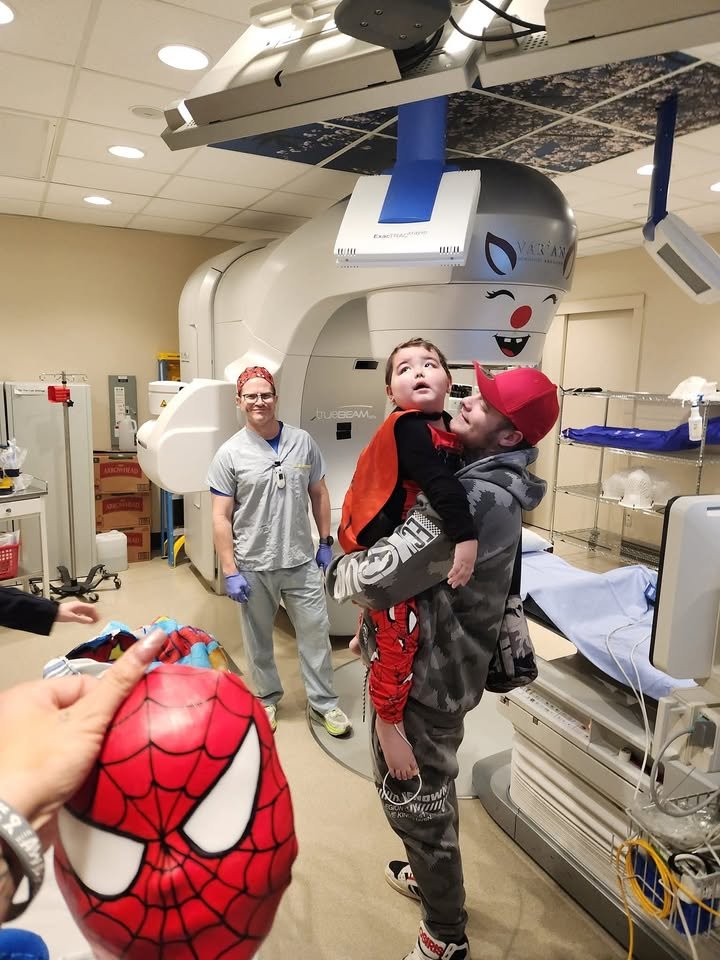
(possible Side Affect of radiation)
Necrosis, or tissue death, is a common and aggressive feature of childhood Diffuse Intrinsic Pontine Glioma (DIPG) tumors. It is often a sign of a fast-growing and high-grade tumor, which is a grave prognostic indicator, though some cases of unexpected long survival have been seen despite its presence. The necrosis is microscopically visible and is part of the tumor’s malignant degeneration.
What necrosis in DIPG means.
Aggressive tumor growth:
Necrosis is a marker of aggressive tumors that grow quickly.
High-grade classification:
It indicates the tumor has progressed to a high grade (WHO III or IV).
Poor prognosis:
The development of new areas of necrosis is a grave prognostic sign, often preceding death.
Part of tumor pathology:
Necrosis is a common microscopic feature of DIPG, along with microvascular proliferation and increased mitosis.
Challenges and considerations.
Distinguishing from treatment effects:
– It can be difficult to distinguish between naturally occurring necrosis and radiation necrosis (tissue damage from radiation therapy).
Impact on imaging:
The size of the necrotic regions can change over time, which is not necessarily related to treatment response, making it challenging to use certain imaging techniques to assess the tumor’s reaction to treatment.
Limited survival impact:
Despite the poor prognosis associated with necrosis, a small number of patients have unexpectedly long survival, suggesting the need for more research into DIPG’s biology and the factors that influence survival.
Key Facts about Necrosis in DIPG
Commonality in High-Grade Tumors:
-Most DIPGs are high-grade astrocytomas (WHO grade III or IV) and typically display features such as mitotic figures, microvascular proliferation, and necrosis. The presence of necrosis is a key criterion for diagnosing the most aggressive type, glioblastoma multiforme (GBM), in other brain regions.
Prognostic Indicator:
The presence of necrosis in a DIPG is an adverse prognostic factor, generally indicating a more aggressive tumor behavior and being associated with a shorter overall survival time.
Imaging Features:
On magnetic resonance imaging (MRI), necrosis may occasionally appear as small areas of contrast enhancement. The presence of necrosis on initial imaging at the time of diagnosis is associated with even shorter survival.
Pathophysiology:
Necrosis in tumors often results from inadequate blood supply and oxygen (hypoxia) as the tumor outgrows its vascularization. This leads to cell death and a localized inflammatory response, which can further alter the tumor microenvironment.
Differentiation from Radiation Necrosis:
Distinguishing tumor necrosis from radiation necrosis (a potential side effect of radiotherapy) can be a diagnostic challenge, as both can present similarly on imaging and cause neurological symptoms. Advanced imaging techniques, such as measuring relative cerebral blood volume (rCBV) with MR perfusion, help in the differentiation process, as tumor progression typically shows hyperperfusion, while radiation necrosis shows hypoperfusion. Biopsy remains the gold standard for definitive differentiation.
Impact on Treatment:
The presence of necrosis can influence the treatment approach, although the overall prognosis for DIPG remains very poor. Treatment strategies might consider managing symptoms related to necrosis (e.g., edema), and some therapies, like bevacizumab, have been explored in cases of post-radiation necrosis.
Primary mutations. (DIPG)
Histone H3 K27M:
A lysine-to-methionine substitution at position 27 in histone H3 (most commonly in the H3F3A gene), which disrupts normal gene regulation.
-This mutation is the most frequent and is a key driver of DIPG formation.
-Because of this mutation, many DIPG cases are now classified as diffuse midline glioma, H3 K27-altered.
Cooperating mutations.
– TP53:
Mutations in this tumor suppressor gene are common, occurring in a majority of cases.
-ACVR1:
Mutations in this receptor gene are found in 20–32% of cases and can be a secondary mutation, especially in H3.1 K27M-mutated
PDGFRA: Amplifications or mutations in this gene are found in a significant portion of tumors.
PPM1D:
– Mutations in this gene are found in some TP53 wild-type tumors and can make them sensitive to certain treatments, like PARP inhibitors.
The exact cause of DIPG is unknown, but it is believed to arise from errors during the development of glial cells. These errors can lead to mutations, such as the H3K27M mutation, which can cause cells to grow and divide uncontrollably. There is no evidence to suggest that environmental factors, diet, or other lifestyle choices cause DIPG, and it is NOT a hereditary condition.
The primary mutation in DIPG is the H3 K27M mutation, a substitution in the histone H3 protein that occurs in about 80% of cases and is now used to classify many of these tumors as diffuse midline glioma, H3 K27-altered. Other common mutations cooperate with H3 K27M, including changes in TP53, ACVR1, and PDGFRA. These additional mutations contribute to tumor development, while the H3 K27M mutation drives the disease
Cellular development errors:
DIPG develops when immature glial cells fail to mature properly and instead become cancerous.
Genetic mutations:
Errors can occur during cell division that cause genetic mutations, such as the H3K27M mutation, which is common in many DIPG cases
Random and unpreventable:
These mutations generally occur randomly and cannot be prevented.
No known environmental link: Research has not found a link between environmental factors like radiation or chemicals and the development of DIPG.
No hereditary link:
DIPG is not a condition that is passed down from parents to children.
What genetic mutation causes brain tumors. (Genetic Testings)
-The human gene for p53 (Tp53) is mutated in the disease Li‐Fraumeni syndrome in which patients are at an increased risk for developing many types of cancer, including brain tumors.
Genetic mutations like those in the IDH1 and IDH2 genes are major causes of brain tumors, particularly gliomas, by affecting how cells grow and multiply. Other genetic mutations can also lead to brain tumors, including amplification of the EGFR gene and mutations in the tumor suppressor genes PTEN and CDKN2A. Certain inherited genetic disorders, such as neurofibromatosis, are also linked to an increased risk of developing brain tumors.
Key genetic mutations.
-IDH1 and IDH2 mutations:
These mutations are very common in low-grade gliomas and secondary glioblastomas. They cause the IDH enzyme to produce a substance called 2-hydroxyglutarate, which can lead to uncontrolled cell multiplication and tumor growth.
-EGFR amplification:
An increase in the amount of the EGFR gene can lead to more of this growth factor receptor, which plays a role in the development of many malignant brain tumors.
PTEN mutations:
Mutations or deletions in the PTEN gene, a tumor suppressor, are another key genetic change identified in many glioblastomas.
-CDKN2A and CDKN2C mutations/deletions:
These genes are important for cell cycle regulation, and their mutation or deletion is linked to glioblastoma.
to glioblastoma.
TERT mutations:
These can lead to overproduction of the telomerase enzyme, which helps maintain the ends of chromosomes and can accelerate tumor growth.
Inherited genetic disorders.
Neurofibromatosis:
-This is a group of genetic disorders that can cause tumors to grow on nerve tissue throughout the body, including the brain.
Turcot syndrome:
This is a rare genetic disorder that can cause both gastrointestinal polyps and brain tumors.
Genetic testing examines your DNA, or genetic material, to look for changes that can cause or increase the risk of a disease.
This can be done through a sample of blood or saliva and can help diagnose genetic conditions, guide treatment, predict future health risks, and inform family planning. The decision to undergo testing is personal, and it is often recommended to discuss the potential benefits, limitations, and emotional aspects with a doctor or genetic counselor.
What genetic testing is.
-it is a medical test that identifies changes, also called mutations or variants, in your genes, chromosomes, or DNA.
-Genes are segments of DNA that carry instructions for your body’s functions.
-Tests can focus on a single gene, a group of genes, or an entire genome.
It can also include biochemical tests that measure specific proteins or enzymes, as their abnormalities can indicate a genetic disorder.
How genetic testing is used Diagnosis:
To identify genetic diseases or conditions that may have caused a person’s symptoms.
Risk assessment:
To determine a person’s risk for developing certain conditions later in life, such as some cancers or heart disease.
Treatment:
To help doctors choose the most effective treatment, as specific gene variants can influence how a person responds to certain medications.
Family planning:
To help individuals or couples understand if they carry gene variants that could be passed on to their children.
What to consider Limitations:
A positive result doesn’t guarantee you will get a disease, and a negative result doesn’t guarantee you won’t.
Emotional impact:
Waiting for results and processing the information can cause emotional stress.
Genetic counseling:
A genetic counselor can help you understand the tests, the potential outcomes, and the implications for your health and family.
Privacy:
While laws like the Genetic Information Nondiscrimination Act (GINA) offer some protection, it’s important to understand the limits of that protection (e.g., life insurance).